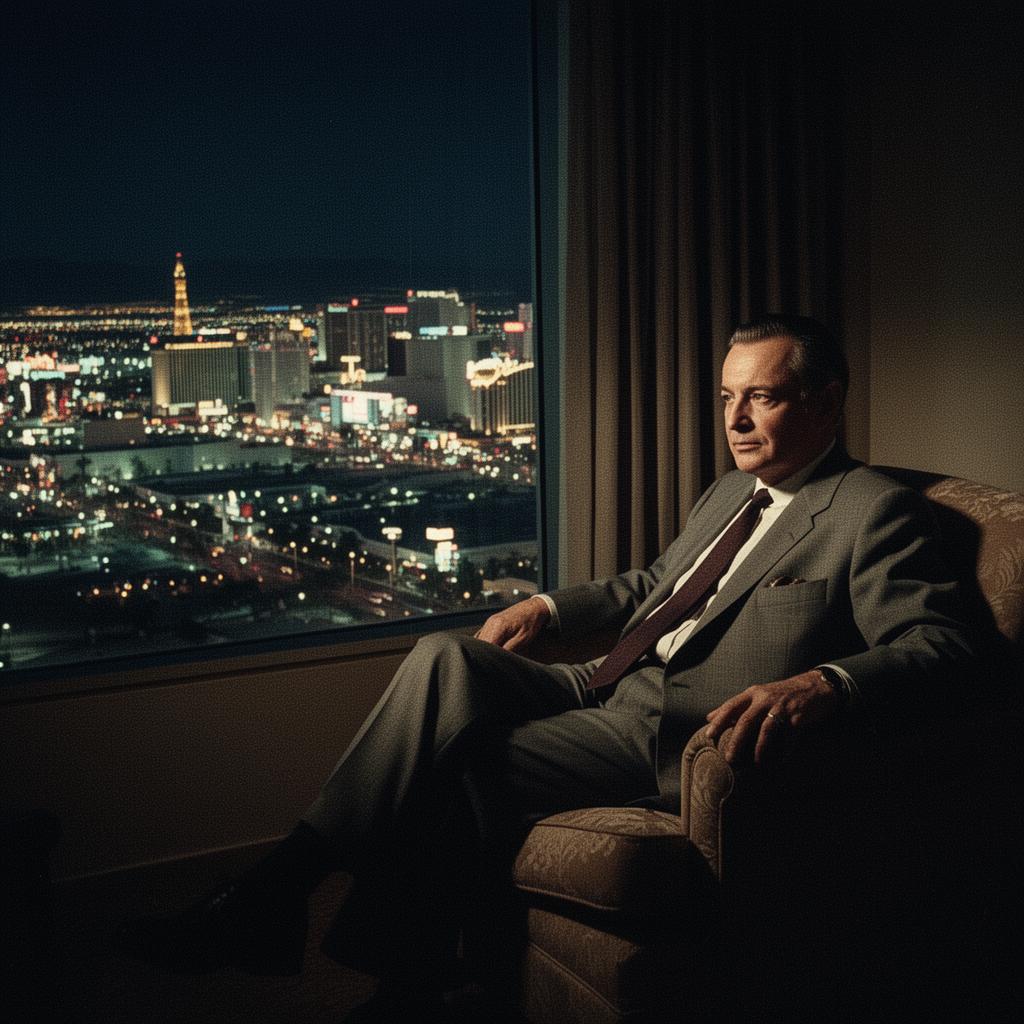
Howard Hughes' arrival in Las Vegas in 1966 marked the beginning of the end for mob control. His unprecedented acquisition spree provided the first major infusion of legitimate capital into an industry dominated by organized crime, paving the way for corporate ownership.
The Midnight Arrival
On Thanksgiving Eve 1966, a train carrying Howard Hughes pulled into Las Vegas. The reclusive billionaire, fresh from the $546 million sale of TWA, was moved under cover of darkness to the Desert Inn's top two floors. He would remain there, rarely seen, for four years.
The Acquisition Begins
When Desert Inn management asked Hughes to vacate his penthouse to make room for high rollers, Hughes simply bought the hotel for $13.2 million. This began an acquisition spree that would include the Sands, Frontier, Castaways, Silver Slipper, and Landmark—eventually controlling roughly 20% of Strip hotel inventory.
The Legitimacy Effect
Hughes' presence transformed perceptions of Nevada gaming. Here was a legitimate American businessman—eccentric, certainly, but not a mobster—investing hundreds of millions in the industry. His example encouraged regulators to pass the Corporate Gaming Act of 1969.
"Howard Hughes bought respectability for Las Vegas. After him, Wall Street could invest without embarrassment."— Gaming historian
The Management Challenge
While Hughes legitimized the industry, his management—delegated to aides known as the "Mormon Mafia"—struggled with operations. The properties lost money under his ownership. But his contribution wasn't operational excellence; it was proving that legitimate capital could enter gaming.
The Departure
In 1970, Hughes departed Las Vegas as mysteriously as he arrived, carried out on a stretcher in the dead of night. He died in 1976, but his legacy endured: the template for corporate casino ownership that would transform the industry.