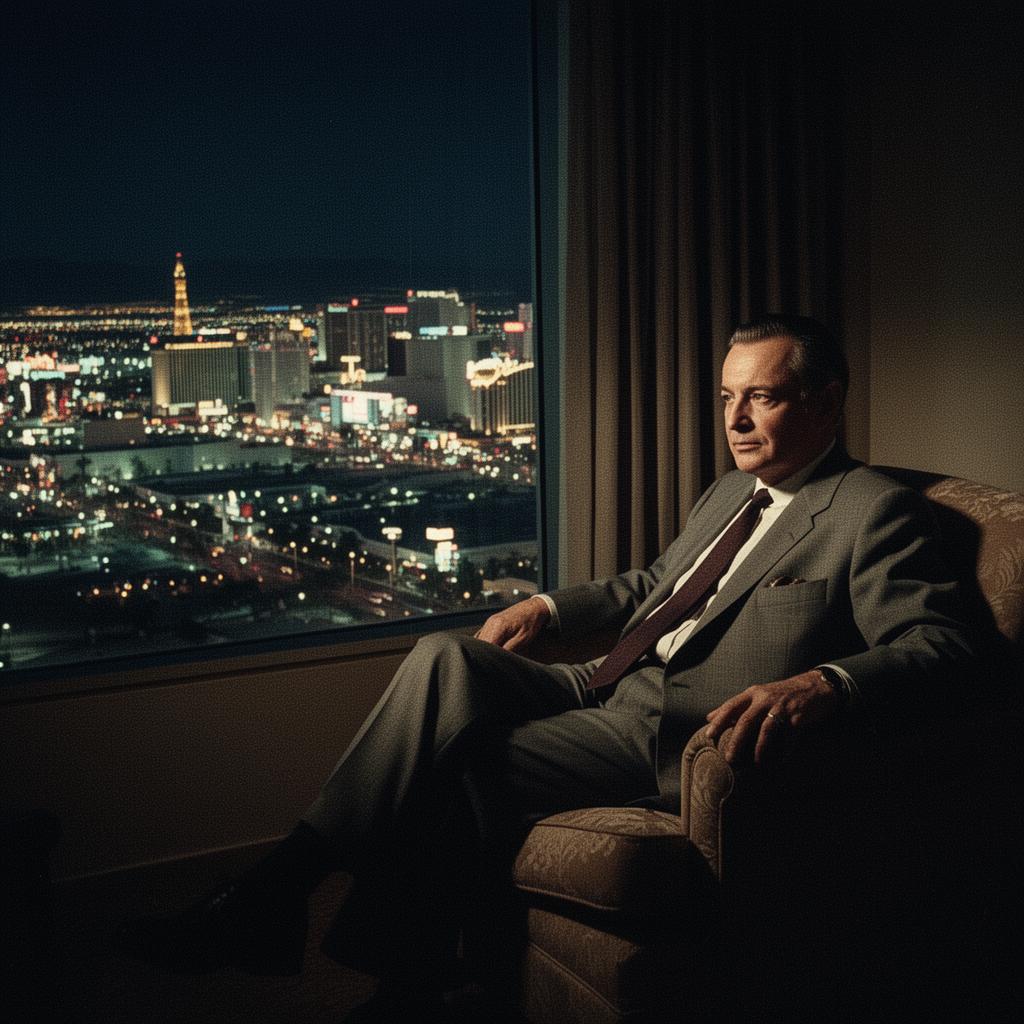
Howard Hughes' acquisition spree (1966–1968) marked the pivotal transition of Las Vegas from organized crime control to corporate legitimacy. Fueled by a $546 million windfall from the sale of TWA stock, Hughes purchased property after property, eventually controlling 20% of Strip hotel inventory.
The Properties
Hughes purchased the Desert Inn, Sands, Frontier, Castaways, Silver Slipper, and Landmark. Each acquisition was headline news—here was a legitimate (if eccentric) billionaire investing in an industry associated with mobsters and murderers.
Regulatory Impact
His entry prompted the Nevada Gaming Control Board to relax licensing strictures, paving the way for the Corporate Gaming Act of 1969. If Howard Hughes could be trusted with a gaming license, why not other corporations?
The Limits
Although his management via the Summa Corporation was marred by absenteeism and internal conflict, and his expansion was eventually halted by DOJ antitrust threats, Hughes' investment validated the gaming industry for Wall Street. He proved casinos could be respectable investments.
The Invisible Owner
Ironically, Hughes himself rarely if ever set foot on the gaming floors he owned. He lived as a recluse on the top floors of the Desert Inn, communicating only through handwritten memos. But his money spoke louder than his physical presence ever could.