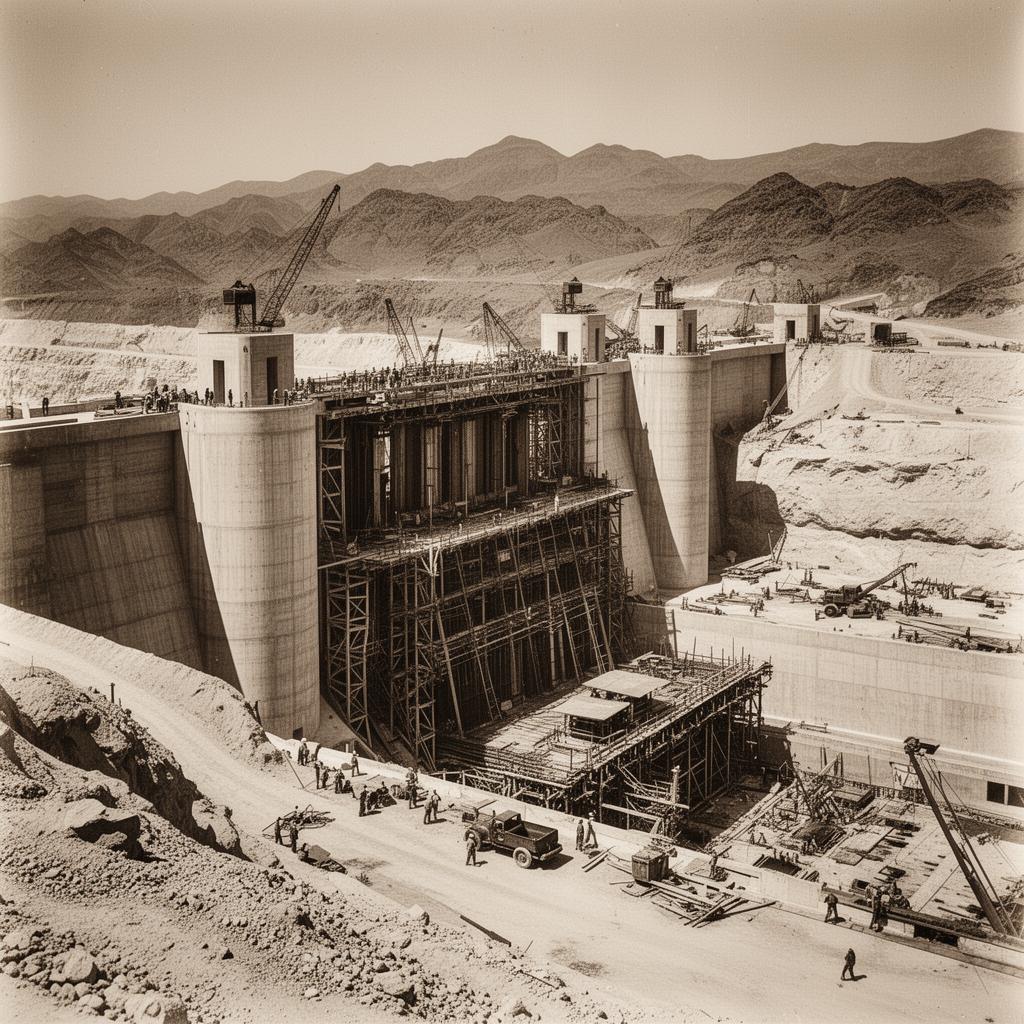
The construction of Hoover Dam (1931–1936) created one of American history's most striking economic experiments: a federal company town where gambling and alcohol were forbidden, positioned just 30 miles from a state where both were legal.
The Federal Reservation
Boulder City was built on federal land as a planned community for dam workers. The Bureau of Reclamation, led by Sims Ely, established strict prohibitions: no gambling, no alcohol, no prostitution. Workers lived under quasi-military discipline, subject to immediate eviction for moral infractions.
The Las Vegas Alternative
Meanwhile, Nevada had just legalized gambling in March 1931. Las Vegas, 30 miles away, offered everything Boulder City forbade. With 5,000 workers earning steady government wages during the depths of the Great Depression, the economic opportunity was irresistible.
The Commuter Economy
This created a perfect economic geography: workers earned in Boulder City's dry, disciplined environment and spent in Las Vegas's wide-open saloons and casinos. Regular bus and taxi services shuttled workers to Fremont Street, where establishments stayed open around the clock to accommodate shift schedules.
The Lasting Impact
The federal/state divide established Las Vegas's identity as an escape from restriction. To this day, Boulder City remains the only municipality in Nevada where gambling is illegal—a living monument to the contrast that helped build modern Las Vegas.