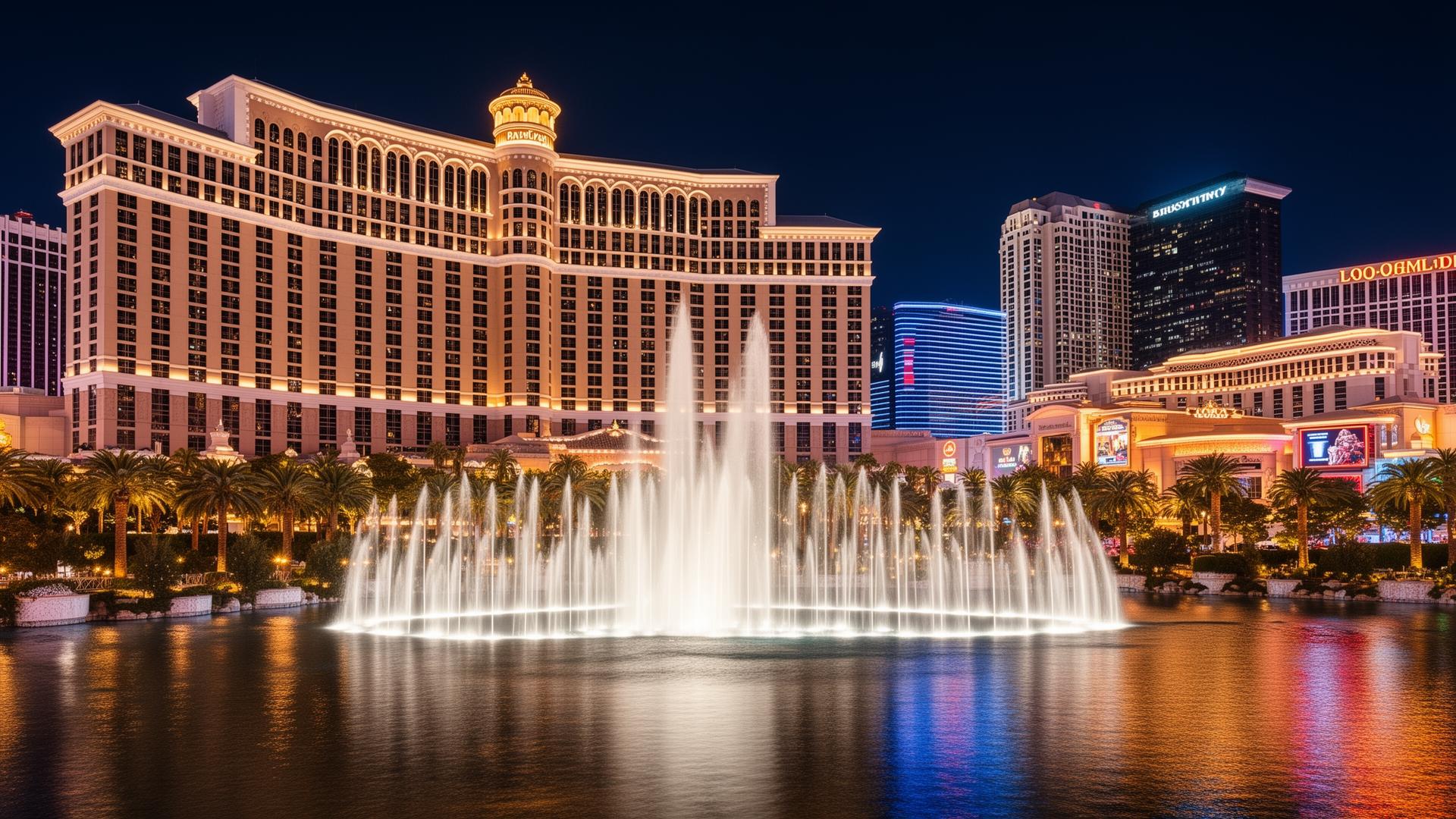
The Megaresort Era (1989–2009) transformed Las Vegas from a gambling-focused town into a global luxury destination. Triggered by Steve Wynn's The Mirage, which proved that high-cost amenities could drive revenue, the era saw the rise of massive, integrated resorts.
The Mirage Revolution
Opened in 1989 by Steve Wynn, The Mirage cost an unprecedented $630 million, requiring $1 million per day in revenue to break even—a target it successfully met, thereby unlocking Wall Street capital for future developments. The property featured a volcanic eruption out front, a tropical atrium, and Siegfried & Roy's white tigers.
The Family-Friendly Detour
Following a brief, failed experiment with family-friendly theming (MGM Grand, Excalibur, Luxor), the industry pivoted toward high-end luxury and convention business with properties like Bellagio and The Venetian. The Strip learned that families didn't gamble enough to justify the square footage devoted to their entertainment.
The Non-Gaming Flip
This period was defined by the consolidation of ownership into massive public corporations (MGM, Caesars) and a shift in revenue where dining, entertainment, and retail eclipsed gambling winnings. The modern Strip casino makes more money from hotel rooms, restaurants, and nightclubs than from the gaming floor.
CityCenter and the End of an Era
The era culminated with the $9.2 billion CityCenter project, which opened during the Great Recession, signaling the end of rapid expansion. The project nearly bankrupted MGM and required a Dubai bailout to complete. It marked both the apex and the conclusion of the building boom.